
Aviation
Editorial only, not financial advice. We do not recommend investments or promise returns. Talk to a licensed professional before you act on anything you read here. Our disclosure
Key facts
- What: Emirates Group half-year results, FY 2026-27 (April 1 to September 30, 2026)
- Profit before tax: AED 4.1 billion (US$1.1 billion), down 66%
- Profit after tax: AED 3.6 billion (US$1.0 billion), down 66%
- Revenue: AED 66.2 billion (US$18.0 billion), down 12%
- Cash at September 30: AED 54.1 billion (US$14.7 billion)
- Said on: November 5, 2026, Emirates media centre
- Also reported by: Khaleej Times, same figures
Emirates Group still made money in the first half of its financial year. Just a lot less than last year.
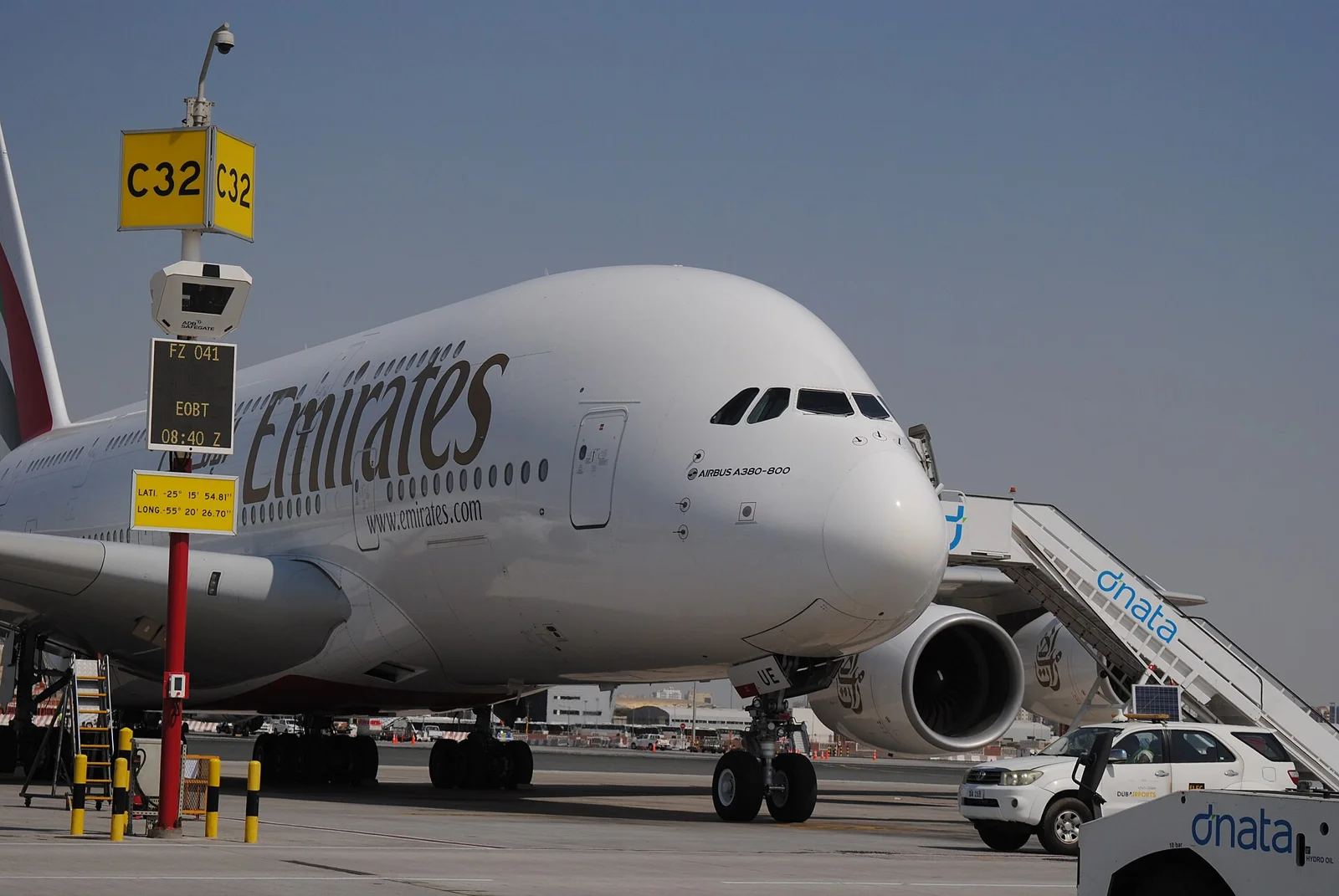
The company’s own media centre put the half-year profit before tax at AED 4.1 billion. That is down two-thirds from the same stretch a year earlier. Profit after tax was AED 3.6 billion. Revenue came in at AED 66.2 billion, down 12%. Cash at the end of September was AED 54.1 billion, compared with AED 59.6 billion at the March 31 year-end. Khaleej Times printed the same numbers the same day.
The Emirates Group has announced its results for the first six months of 2026-27. Emirates Airline reported a profit before tax of US$ 1.0 billion and revenue of US$ 15.5 billion. pic.twitter.com/OQJVmnNI3H
- Emirates (@emirates) November 5, 2026
What the chairman blamed
HH Sheikh Ahmed bin Saeed Al Maktoum chairs Emirates airline and the Group. He did not sugarcoat the half.
“Unprecedented regional challenges and high fuel prices,” he wrote in the release. Global jet fuel prices, he said, had doubled against the year-ago period. Cargo still helped. He called out a strong contribution from that side of the business, and said it propped up revenue and cash while passenger flying took the hit.
By September 30 the airline was back on 91% of its pre-disruption network. That meant 150 airports in 78 countries and territories, the release says.
Airline vs group
Strip out the group wrap and the airline looks worse. Emirates airline alone booked AED 3.7 billion profit before tax. That is down 68%. Revenue there was AED 56.9 billion, down 13%.
dnata, the services arm, made AED 410 million before tax, down 51%. Its revenue was AED 11.0 billion, down 7%.
Passenger traffic explains a chunk of the drop. Emirates flew 21.8 million people in the half. That is down 22%. Seat factor averaged 72.0%. A year earlier it was 79.5%.
SkyCargo tells a different story. Tonnes moved were almost flat at 1.2 million, down just 1%. Cargo revenue, though, jumped 52%. The release says conflict cut airfreight capacity elsewhere, so more freight landed on Emirates planes.
Fuel was the other squeeze. Before hedging, the fuel bill rose 60% even though uplift fell 12%. Hedging gains of AED 7.1 billion cut the net rise to 13%. Fuel still made up 34% of operating cost.
What kept running
Spending did not freeze. In the half the group took nine new A350s. It finished cabin refits on 12 aircraft. Its Starlink-fitted fleet reached 57 jets. It also broke ground on a US$5.1 billion engineering and MRO campus at Al Maktoum International Airport.
Group EBITDA landed at AED 12.5 billion (US$3.4 billion), down 41%. Headcount edged down 2% to 128,237.
Sheikh Ahmed said the group enters the second half with “measured optimism.” He said it will keep watching costs and geopolitics, and pointed to the cash pile as a buffer.
Editorial only, not financial advice.
Top photo: Julian Herzog via Wikimedia Commons, CC BY 4.0.
Keep reading
More in AviationRelated stories
The newsletter
Get The Billionaire Daily newsletter
Our best stories on cars, watches, travel and experiences, in one email a week.